‘Wicked: For Good’ Earns High Marks for Powerful Performances and Emotional Depth
- Nov 19, 2025
- 3 min read
19 November 2025
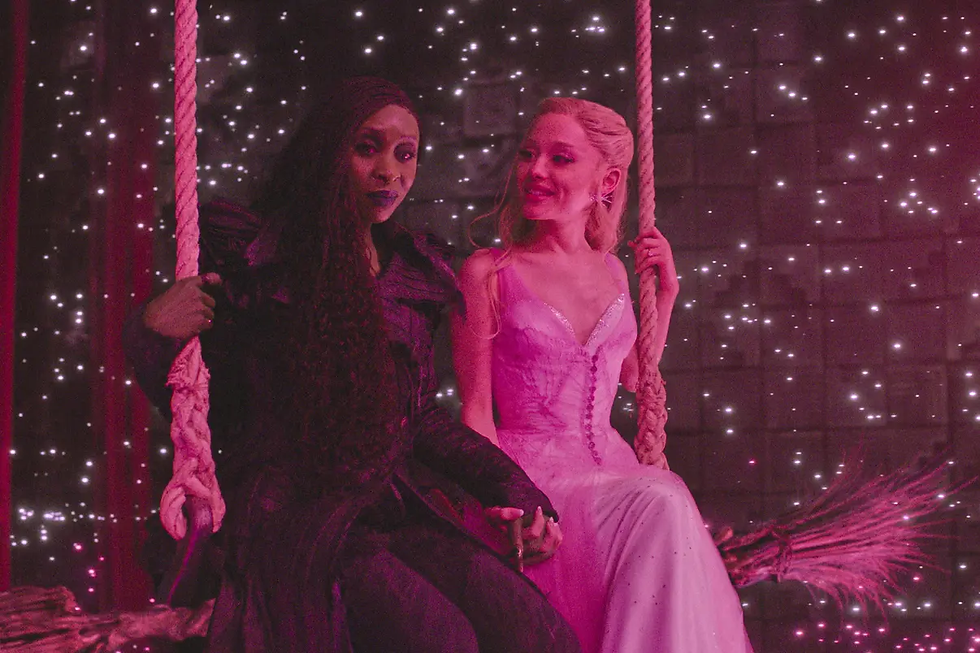
The second chapter of the cinematic adaptation of the Broadway musical Wicked: For Good landed in theaters with big expectations and delivered a notably richer, more emotionally charged experience than its predecessor, says a new review from The New York Post.
Though the original film captured audiences with its bright spectacle and musical flair, this sequel shifts tone, taking a darker and more thoughtful turn. The story picks up a year after Elphaba’s dramatic “Defying Gravity” moment, and director Jon M. Chu is commended for anchoring the film less in pageantry and more in character conflict and emotional stakes. What was once a flashy pageant of songs now becomes a deeply personal journey for the two central characters, Elphaba and Glinda.
At the heart of the film are two powerhouse performances. Cynthia Erivo takes on the role of Elphaba with a rare blend of vibrato, vulnerability and simmering strength. Her vocal presence takes the lead industry comparisons floating to the level of Jennifer Hudson’s groundbreaking turn in Dreamgirls and she balances show-stopping moments with scenes of raw introspection. The review singles out her as “surely the best movie-musical vocal turn” in recent memory.
Opposite her, Ariana Grande steps into the character of Glinda with a marked maturity. While her presence in the first film leaned more youthful and effervescent, here she inhabits Glinda’s high-stakes public role with internal questions about purpose and identity. The duo’s emotional synergy culminates in the climactic duet “For Good,” which critics say redeems any earlier missteps and brings the audience together in tears.
The narrative itself explores the diverging paths of the two witches. As Elphaba embraces her role as a rebel confronting a corrupt Wizard of Oz, Glinda becomes a symbol of propaganda and the cherished face of the Wizard’s regime. The film trades some of the first entry’s lighter moments for a thematic focus on activism, identity and the cost of power. That shift makes the story less of a fairy-tale romp and more of an emotionally layered finale.
However, the review notes that this tonal shift is not without criticism. Splitting the original source material into two full films has invited scrutiny some moments feel padded, and some of the newly added songs are described as weaker compared to the iconic stage numbers. One song, “The Girl in the Bubble,” performed by Grande, is singled out for bland lyrics and a tone-mismatch with the rest of the film. Despite these flaws, the review finds the emotional payoff in the final sequence sufficiently strong to justify the journey.
From a technical standpoint, the film’s design impresses. The production embraces the vibrant world of Oz, the sets and costumes carry rich detail, and the performances lean into the moment. Yet what sticks with viewers most is the silence between the big numbers the pauses, the looks exchanged, and the fear and doubt. The review notes that for all the spectacle, the quieter moments are where the film truly earns its emotional resonance.
Given the film’s release on November 21, 2025 in the U.S., the review sets up audience expectations: be prepared for spectacle, yes, but also for the emotional work. It signals that this cinematic “act two” is less about repetition and more about transformation both for its characters and the film series as a whole. While younger viewers may find it heavier than they expected, long-time fans of the musical will likely find the conclusion satisfying.
In summary, Wicked: For Good stands as a bold and mostly successful attempt to deepen the world of Oz with grit, heart and strong performances. It proves that a musical sequel need not re-hash the first installment’s energy but can instead evolve it into something unexpected and uncommonly moving.


Comments