Peter Falk’s Daughter Jacqueline Falk Dies by Suicide at 60
- FameGlo Entertainment Desk

- Apr 29
- 3 min read
29 April 2026
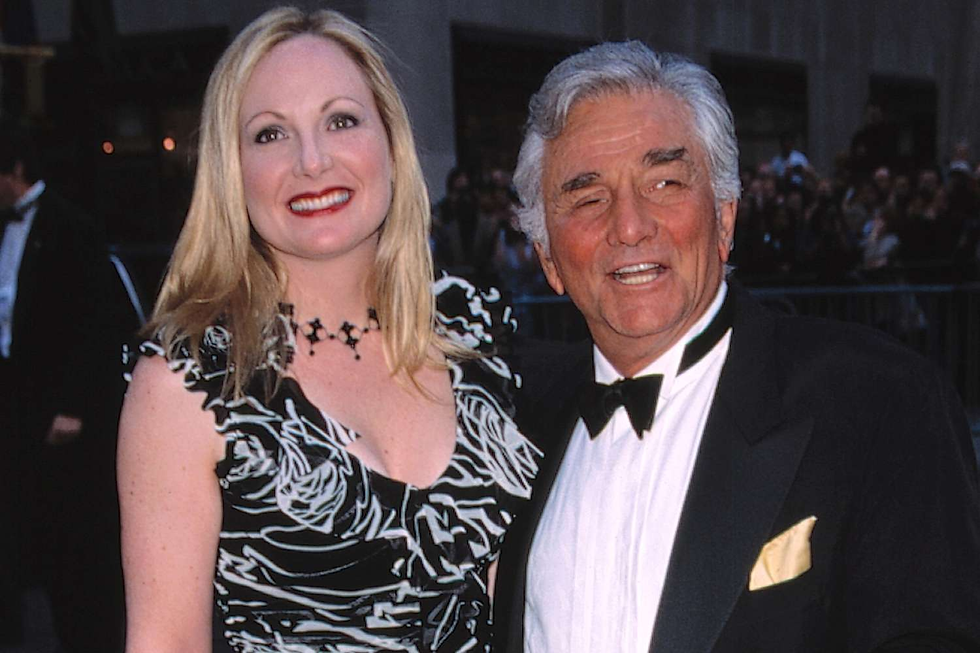
In the quiet space between public legacy and private life, there are stories that rarely reach the surface until a moment of loss brings them into focus. For Jacqueline Falk, the daughter of beloved actor Peter Falk, that moment has arrived with a sense of sadness that extends beyond recognition and into reflection. While her father’s career placed him firmly in the spotlight, her own life remained largely outside of it, making the news of her passing feel both deeply personal and unexpectedly public.
Jacqueline Falk died at the age of 60 in Los Angeles, with the Los Angeles County Medical Examiner ruling her death a suicide. The details surrounding her death remain limited, and it is not known whether she left a note or any explanation behind. The case remains open as authorities continue their investigation, leaving unanswered questions that often follow such sudden and tragic losses.
Her life, though connected to Hollywood through her father, was defined by distance from it. Jacqueline was one of two daughters adopted by Peter Falk and his first wife, Alyce Mayo, during their marriage in the early 1960s. While her father became a cultural icon through his role as Lieutenant Columbo, a character known for his understated brilliance and enduring popularity, Jacqueline chose a path that kept her away from the public eye. This contrast between fame and privacy shaped how her story was experienced, known more through association than through personal exposure.
Her sister, Catherine Falk, followed a different trajectory. Catherine became a private investigator and later an advocate for legislation related to familial visitation rights, particularly after a well publicized estrangement from their father in his later years. That period in the family’s history brought attention to complex issues surrounding conservatorship, communication, and access, especially as Peter Falk faced declining health due to Alzheimer’s disease. Jacqueline, however, remained largely outside of that public narrative, maintaining a quieter presence even during times of family tension.
The legacy of Peter Falk adds another layer to the story. Best known for his portrayal of Columbo, he built a career that spanned decades, earning critical acclaim and a lasting place in television history. His work extended beyond the role that defined him, including performances in films and collaborations that showcased his range as an actor. Yet within that legacy, there existed a private family life that was not always visible to audiences, one that included both connection and distance.
Jacqueline’s passing brings that private dimension into sharper focus. It highlights the reality that behind public figures are families whose experiences unfold away from the spotlight, shaped by circumstances that are often complex and deeply personal. Her decision to live outside of public attention means that much of her story remains unknown, understood only in fragments through the relationships and context that surrounded her.
There is also a broader context that frames moments like this. Stories of loss, particularly those involving mental health, often carry layers that are not immediately visible. They prompt reflection not only on the individual but on the environments, experiences, and challenges that may have shaped their journey. While specific details about Jacqueline’s life and struggles have not been made public, the nature of her passing inevitably brings attention to those wider conversations.
At the same time, the response to such news tends to move between public acknowledgment and private empathy. For those who remember Peter Falk’s work, the connection to his daughter may be rooted in recognition, while for others, the story resonates as a reminder of how loss can intersect with any life, regardless of background or visibility. It is a moment that exists both within a specific narrative and within a larger human experience.
The absence of detail also leaves space for reflection rather than conclusion. Without a clear understanding of the circumstances leading up to her death, the story remains open, defined by what is known and what is not. This uncertainty is not uncommon in cases like this, where the focus shifts from explanation to acknowledgment, from answers to remembrance.
In the end, Jacqueline Falk’s life cannot be fully understood through the limited details that have emerged. What remains is a quiet narrative, one shaped by privacy, connection, and the complexities of living alongside a public legacy while remaining outside of it. Her passing marks a moment of loss that is both specific and universal, touching on themes of family, identity, and the unseen struggles that can exist beneath the surface.
As the story settles into memory, it leaves behind a sense of reflection rather than resolution. It is a reminder that every life, whether lived in the spotlight or beyond it, carries its own depth and meaning, and that sometimes the most important aspects of a person’s story are the ones that remain unspoken.


Comments