Colleen Hoover Calls Blake Lively, Justin Baldoni Film Dispute a “Circus” in Rare Response
- Nov 20, 2025
- 3 min read
20 November 2025
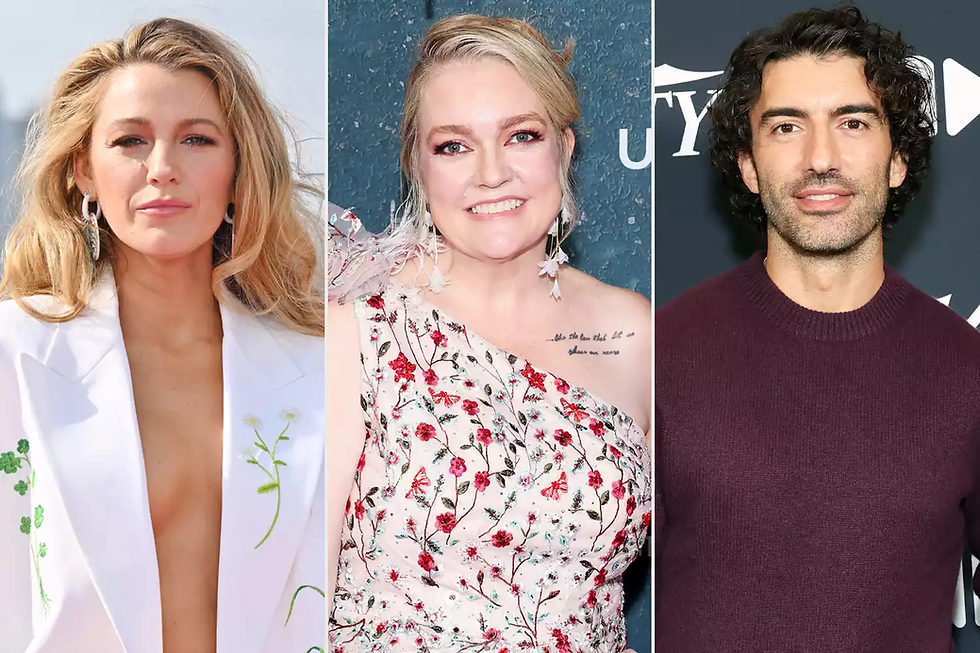
Bestselling author Colleen Hoover, whose novel It Ends With Us was adapted into a film starring Blake Lively and directed by Justin Baldoni, has publicly condemned the ongoing legal confrontation between Lively and Baldoni, describing the controversy as a “circus” and expressing how deeply the situation has affected her personally and professionally.
In a recent interview speaking to Elle magazine, Hoover revealed that she was “completely unaware that anything was happening” on the film set and labelled the public backlash and media coverage as “unfortunate” and “disappointing.” She criticised how the ongoing legal battle has overshadowed the film’s subject matter domestic violence and lamented the negative impact it has had on other cast members’ careers.
Hoover remarked that she now finds it hard to endorse her own book, saying: “I can’t even recommend [the book] anymore,” and added that she is “almost embarrassed to say I wrote it.” Though she still maintains a sense of pride in the work, she said that pride is now far less publicly displayed. The book, which was inspired by her mother’s experiences with domestic violence, has become a personal liability amid the legal and public relations turmoil surrounding the film.
While Hoover confirmed that she has “her own story I could tell,” she stated that she chooses to remain quiet: “I’m just trying to stay removed from the negativity. I have my own story I could tell … but I don’t want to bring attention to it, and I don’t want to have to put someone else down to lift myself up.” She asserted that for now she will “let people think and say what they’re going to say” because she feels “it is so big at this point that there’s nothing anyone can say to change whatever opinion people have of it, even though no one has the actual truth. Not even me.”
The broader dispute erupted when Lively filed a lawsuit in December 2024 alleging sexual harassment and retaliation on the set of the adaptation, seeking damages exceeding $160 million. Baldoni responded with a countersuit for $400 million, which was later dismissed in June 2025. Hoover, who served as executive producer of the film, initially showed public support for Lively but later deactivated her Instagram account amid the growing controversy before returning with all images featuring Lively and Baldoni removed. Newly surfaced text messages from Hoover to Baldoni show her expressing frustration and accusing parties of using their platforms to damage reputations.
In one private message dated August 15 2024, Hoover reportedly told Baldoni: “The back and forth articles from both camps is just so upsetting and ridiculous. It’s making everyone working on this movie look immature.” She added, “I have been disappointed personally by your actions many times… Please don’t continue to use it to harm me or mine. That’s all I’m asking.” These messages, included in legal filings by Baldoni’s co-defendants, highlight Hoover’s frustrations with her reduced role, her surprise at the scale of the dispute and her unwillingness to be dragged further into the public fight.
Hoover also expressed deep concern for her mother, saying, “I feel awful because I almost feel like she’s gone through more with the aftermath of this film, more pain than she went through with my dad, just seeing the ugliness of it.” In describing the emotional toll the situation has taken, she admitted that the book’s message once a point of personal empowerment now stirs “PTSD” when revisited.
As a result of the drama, Hoover said she has grown more protective of her next project. Her upcoming novel Woman Down, scheduled for release in January, reportedly centres on a once-celebrated author who withdraws from both fame and writing after a viral backlash. Many observers see the book as mirroring Hoover’s current mindset disillusioned by the machinery of Hollywood and public brands.
While the trial between Lively and Baldoni is scheduled for March 2026, Hoover’s remarks reflect a broader reckoning: how creators and storytellers can become collateral in cultural controversies, even when they are not the central actors in them. Her decision to speak out albeit cautiously illustrates the complexity of being both originator and executive producer when a story takes unexpected and public turns.


Comments