Bill Hader Recalls Strange Early Encounter with Martin Kove That Echoes Recent Cobra Kai Incident
- Jun 26, 2025
- 5 min read
26 June 2025
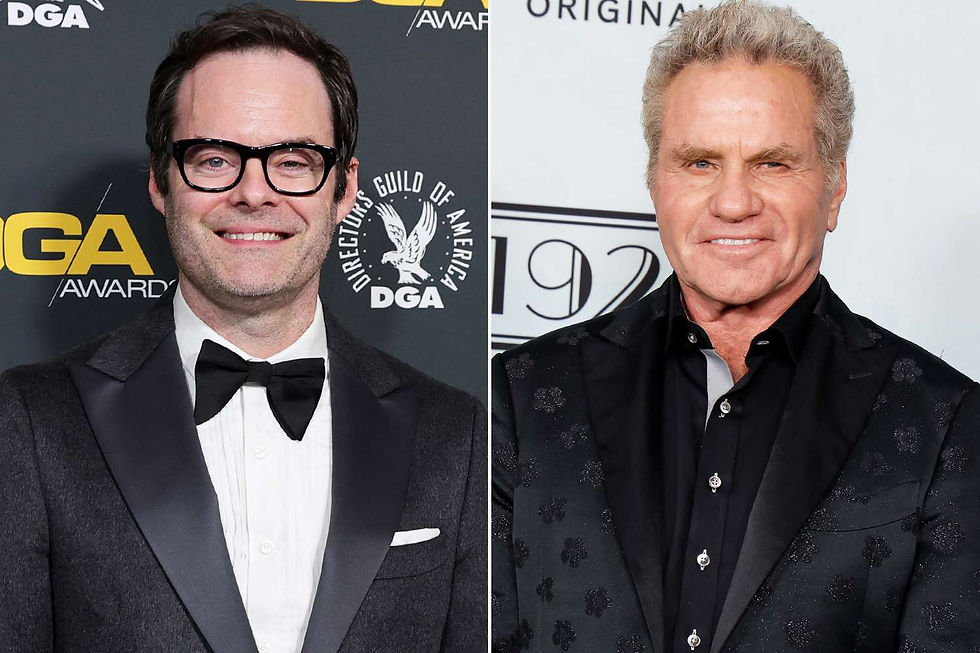
Bill Hader has shared a vivid story of a perplexing encounter with actor Martin Kove from over a decade ago that now seems unsettlingly familiar, given recent headlines involving Kove. The "Barry" star recalled the incident during a 2013 appearance on Marc Maron’s podcast "WTF", where he described a baffling and somewhat humiliating moment while working as a driver in Hollywood. At the time Hader was just twenty years old and still finding his footing in show business when he accepted a job chauffeuring Kove, then best known for portraying the ruthless John Kreese in The Karate Kid franchise.
Hader said that on the day in question Kove had not yet reviewed the script for the project they were working on. According to Hader the veteran actor deliberately misled him about directions, sending him off course and ultimately causing them to arrive late on set. Hader recounted how his supervisor unleashed a harsh rebuke blaming Hader for the delay. It was only the beginning of a long and bewildering day that offered Hader his first real taste of Hollywood power dynamics and disillusionment.
The bizarre moment came later, on their way back from the set. Kove asked Hader if he was upset and insisted that they make a stop for a milkshake and a cookie. Hader complied driving them to a fast food restaurant only for Kove to return moments later indulging himself while telling Hader to move along. Hader described the moment as the loudest possible silent insult. Kove had promised a treat only to consume it himself and drive off ignoring Hader’s needs, a gesture Hader called a "weird mind f--k." The stunt was clever yet cruel and marked for Hader a painful lesson in the game of power dynamics that can underpin relationships in show business.
Hader explained that despite feeling bruised by the prank he understood that Kove might have been experiencing turmoil at the time. Hader heard rumors that the actor was going through a divorce and facing personal struggles, a reality that may have manifested as erratic behavior. Hader offered what he called a silent understanding recognizing that Kove could be a kind person going through a difficult phase. Over the next few days Hader continued to drive Kove but chose to avoid conversation, staring straight ahead and preserving his own peace and pride.
Ironically the anecdote has resurfaced following recent troubling events involving Kove. At Washington State Summer Con earlier this month Kove was accused of biting his Cobra Kai costar Alicia Hannah Kim during a fan convention appearance. Hannah Kim later filed a police report recounting that when she tapped Kove on the shoulder to greet him he grabbed her arm and bit down hard almost drawing blood. Though she ultimately declined to file charges Kove admitted the incident was real but argued it was an attempted joke consistent with their playful interactions on set. He apologized publicly saying he went too far and that his action was indefensible.
These recent allegations echo the unsettling blend of aggression and unpredictable behavior Hader described years earlier. The fast food prank and the biting incident both cast Kove as a performer who acts impulsively and possibly lacks full awareness of his own actions. In both instances he delivered gestures disguised as jest but left the recipient feeling violated and bewildered.
On the podcast Hader said that the prank was his first real welcome to Hollywood moment a rude introduction to the rules of status and performative cruelty that can shape the industry. It was an initiation into the unwritten code that power can be used not only to elevate but also to intimidate, to set boundaries through emotional manipulation rather than physical force. In this case the cookie and milkshake became tools of status signaling leaving Hader feeling small and powerless.
In recent days social media has unpacked the similarities between the two incidents. Hader’s story has gone viral as fans draw a line between the old anecdote and the new controversy. People on forums have noted the recurring pattern, suggesting that such behaviors reflect a broader issue in Hollywood where age and legacy can give license to hostile pranks and worse. One commenter on Reddit likened Kove’s composure to that of Michael Scott from The Office someone who thought they were being funny while oblivious to the damage of their actions. Another described the biting as a moment where boundaries collapsed, reinforcing the uncomfortable power play that Hader encountered.
Both incidents have prompted reflection on accountability and the blurry line between harmless fun and harmful behavior. Hader was cautious to acknowledge that Kove might have been going through personal crisis that day. Hannah Kim did not press charges, yet requested that the incident be documented and went public expressing disappointment. Together these episodes paint a portrait of a man whose impulse to provoke or entertain has on occasion caused pain. They raise questions about whether such behavior can be excused as eccentricity or if it signals a deeper disrespect.
For Hader the event was an early lesson that power in the entertainment world can be wielded innocuously or abusively. His memory of obediently driving Kove for days in silence speaks volumes about the silent resignation often demanded by those with less influence. The story demonstrated that hierarchy can manifest in moments of emotional humiliation rather than overt confrontation. It invited listeners to empathize with the young driver forced into silence rather than conflict.
In the aftermath of the convention incident Kove has said he regrets his action and promised to learn from it. Still the repetition of antics rooted in emotional disregard calls forth a conversation about the social responsibility that comes with fame. The move from a lopsided fast food prank to something more physically jarring is troubling for many. Some hope the public apologies mark a turning point but others argue that past behavior cannot fully fade.
Hader has declined further comment on the biting incident focusing instead on his memory of the cookie prank that led to an enduring lesson in show business humility. His story remains a cautionary tale about influence and cruelty hidden behind charisma. As the Cobra Kai community and entertainment world assess Kove’s apology the juxtaposition of these stories offers a unique opportunity for conversation about consent respect and empathy. It reminds us that behind the smiles of stars there often lies a web of complex relationships shaped by power and performance.
If comedy and cruelty appear interchangeable in Hollywood it is worth questioning where lines are drawn who draws them and what legacy is left when jokes are shaped by force rather than kindness.


Comments